


X-ray of a funnel-shaped machine. One of the chambers is marked in red, like a leak.
M&CMendonça & Co. Issue 01 · Nov 2026
Working material · use it in 15 minutes

FunnelX-Ray

The 7 places your funnel loses money, and the fix for each one.

You already know what an order bump, an upsell and an evergreen funnel are. This isn't a theory class. It's the exact spot where money sits idle in your funnel, and the fix you can make tomorrow, without hiring anyone or rebuilding the business.

07profit points
20checklist questions
01calculator with your numbers
15minutes to use it

01 · Method

How to use it in 15 minutes

Don't read it all at once. Follow the order below, with last month's numbers open next to you.

Desk seen from above, with sheets of paper sketched with boxes and arrows in a funnel shape, a ruler, a compass and a red pencil.
Fig. 01The map on paper
  1. 00:00 to 03:00

    Look at the map

    From memory, mark the steps you already have. Wherever there's nothing, there's money sitting still.

  2. 03:00 to 08:00

    Take the checklist

    20 yes-or-no questions. Your score and your weakest points show up right away.

  3. 08:00 to 12:00

    Read only your weak points

    Go straight to the points the checklist flagged. In each one, read the common mistake and the one-day fix.

  4. 12:00 to 15:00

    Run the numbers

    Put your numbers into the calculator and see how much each fix adds per month. Pick one fix to make tomorrow.

Have these open

  • How much you spent on ads last month
  • How many sales you made that month
  • The price of everything you sell
  • The list of everyone who has bought from you

One fix at a time. If you change three things at once, you won't know which one worked.

02 · Map

The funnel map

The ad brings people in. The profit lives in what happens after the first purchase.

Every step has a job. The red numbers mark where each of the 7 points in this material sits. Notice the arrow that loops back: people who already bought from you are the cheapest place to start any funnel.

Funnel map Traffic and content, lead magnet, front-end offer, order bump, upsell, downsell, recurring revenue and high-ticket offer, in sequence. Every buyer goes into the past buyers list, which loops back to the start of the funnel. Traffic and contentevergreen or launch 6 Lead magnetvalue for a contact Front-end offerpays for the ads 1 Order bump+1 click at checkout 2 Upsellbigger offer, right away 3 Downsellfor those who said no 4 Recurring revenuepaid every month 5 High-ticket offerthe biggest ticket Past buyers listeveryone who bought 7 back to the start if they say no Funnel map Traffic and content, lead magnet, front-end offer, order bump, upsell, downsell, recurring revenue and high-ticket offer, in sequence. Every buyer goes into the past buyers list, which loops back to the start of the funnel. Row 1 · acquisition Traffic and contentevergreen or launch 6 Lead magnetvalue for a contact Front-end offerpays for the ads 1 Order bump+1 click at checkout 2 Row 2 · profit per customer Upsellbigger offer, right away 3 Downsellfor those who said no 4 Recurring revenuepaid every month 5 High-ticket offerthe biggest ticket Past buyers listeveryone who has bought, from any step 7 if they say no back to the start
Funnel map. The legend below describes each step.
  • 6Traffic and content. Brings people in. It can run every day (evergreen) or on set dates (launch).
  • Lead magnet. Something useful, like this, in exchange for the person's contact info.
  • 1Front-end offer. The first purchase. Cheap, and built to pay for the ads.
  • 2Order bump. One more item, added with a single click before paying.
  • 3Upsell. A bigger offer, right after the purchase.
  • 4Downsell. A smaller version for people who said no to the upsell.
  • 5Recurring revenue. What the customer pays every month to keep going.
  • High-ticket offer. Your highest-value product, for people who already bought and already trust you.
  • 7Past buyers list. Everyone who already bought. They get a new offer and loop back to the start.

03 · Points

The 7 profit points

Black iron funnel hanging in the dark, with a crack on the side where a red thread runs out and drips onto a sheet of paper.
Fig. 03Where the money leaks

Each point is a place where money comes in or leaks out. They all follow the same structure.

What it is, when to use it, a ready-made example for a service business, an info product and a local business, the payoff in the short, medium and long term, the mistake people make most, and the fix you can make tomorrow on your own.

The numbers in the examples are illustrative. They're there to show the math, not to promise results.

Point 1 of 7

A front-end offer that pays for itself

On the map: front-end offer

It's the first thing a customer buys from you. It's built so the sale pays for the ad that brought that customer in. The profit comes from what they buy next.

When to use it

When you run ads and the cost of each sale eats almost all your margin. Or when your main offer is too expensive for someone who just found you.

The math

money in on day 1 ≥ cost per sale

CPL.
What you pay in ads for each lead.
Cost per sale.
What you spend on ads for each sale. Total ad spend divided by the number of sales.
Day-1 value.
Front-end offer, add-on and follow-up offer: everything the customer buys on the same day.

Ready-made example

Service

A social media agency that sells a $2,500/month retainer. Up front, a $297 profile audit, delivered in 48 hours. ExampleWith a cost per sale of $220, the audit already pays for the ads. Everyone who buys the audit becomes a warm list for the monthly retainer.

Info product

Main course at $1,997. Up front, a $47 practical guide, with a $27 add-on and a $197 follow-up offer. ExampleIf the guide's cost per sale is $60 and each buyer spends $70 on average on day 1, the ads pay for themselves. Every course sale is profit.

Local business

A med spa with a $1,200 treatment. Up front, a consultation with a facial for $97, advertised to the neighborhood. ExampleAt $35 per booking and a 60% show rate, each client seen costs about $58. The consultation pays for the ads. The treatment is offered during the visit.

The payoff

Short term
Ads stop being an expense and come back as cash the same month.
Medium term
Raising the budget stops being a gamble. It becomes math: if each sale pays for its ads, more budget means more customers.
Long term
A buyer list that grows every month, made of people who already trusted you once.

Common mistake

Making a cheap front-end offer that has nothing to do with the main offer. Someone who buys a recipe ebook won't turn into a financial consulting client. The front-end offer has to be the first step of the same problem.

One-day fixno hiring

  1. Open your ads manager and write down how much you spent and how many sales you made in the last 30 days.
  2. Divide spend by sales. That's your cost per sale.
  3. If it's higher than the money that comes in on day 1, pick a piece of what you already deliver (an audit, a module, a short session) and turn it into a front-end product with its own price.


Point 2 of 7

Order bump

On the map: order bump

It's an extra item offered at checkout. The buyer adds it with one click. It costs little next to the main purchase and complements what they've already decided to buy.

When to use it

Any time there's a purchase. It's the simplest fix on the list, because you don't have to convince anyone again. The decision to buy has already been made.

Ready-made example

Service

A $3,000 website proposal. At the end, an optional line already written in: “page copy written by us, add $490”. When you sell through conversations, that line is your order bump. The client just says yes.

Info product

A $497 course. At checkout, a box: “ready-made spreadsheets and templates, add $37”. Example100 sales at a 30% take rate add $1,110 a month, without another dollar in ads.

Local business

A pet groomer with a $90 bath and haircut. When booking: “coat conditioning, add $25”. On a restaurant's delivery order: “house dessert, add $9”. One sentence, one price, one yes.

The payoff

Short term
Average order value goes up in the first week.
Medium term
Each sale covers a bigger share of the ads. The front-end offer pays for itself more easily.
Long term
You find out what customers want beyond the main product. That's a lead for a new product.

Common mistake

Offering an item that has nothing to do with the purchase, or that costs almost as much as it does. A pricey add-on becomes a second decision and kills the main sale. It has to be a one-click decision.

One-day fixno hiring

  1. List what your customers ask for most after they buy.
  2. Pick the item that's least work to deliver and price it well below the main offer.
  3. Set it up as an order bump in your checkout platform, or as an optional line in your proposal.

Point 3 of 7

Upsell

On the map: upsell

It's a bigger offer, shown right after the purchase. It takes the customer further toward the same result, or gets them there faster.

When to use it

When customers, after buying, ask “now what?” or ask for help putting it to work. That question is your next offer asking to exist.

Ready-made example

Service

A photographer who sells an $800 shoot. While the client is looking at the previews: “printed album with 30 more edited photos, $650”.

Info product

They bought the $497 course. On the thank-you page: “want me to review your project in 3 live sessions? $1,497”. Example100 sales at an 8% take rate add $11,976 a month.

Local business

An auto repair shop. The customer came in for an oil change. With the car on the lift, the mechanic shows the worn-out brake pads and offers to replace them on the spot, with cheaper labor since the car is already there.

The payoff

Short term
More revenue per customer on the same day, with no new ads.
Medium term
People who buy the bigger offer get more hands-on support. They become your best case studies.
Long term
Every customer has a next step inside your business, not at a competitor's.

Common mistake

Waiting weeks to make the offer. Trust peaks right after the purchase. After that, people cool off and the same invitation becomes a brand-new sale, with the cost of a brand-new sale.

One-day fixno hiring

  1. Write down the three questions customers ask most after they buy.
  2. The answer that takes the most work becomes your follow-up offer. Put a price on it.
  3. Write a ready-to-send message with that offer and send it to every new buyer on the day they buy.

Point 4 of 7

Downsell

On the map: downsell

It's a smaller, cheaper or split-payment version, offered to people who said no to the bigger offer. You trade a “no” for a “smaller yes”.

When to use it

When lots of people get as far as the proposal and don't buy. Or when you keep hearing “not right now”.

Ready-made example

Service

A consultant pitches a $12,000 project and hears “it doesn't fit right now”. The smaller version: just the project diagnosis, for $2,500, credited toward the full project if they sign within 60 days.

Info product

They turned down the $1,497 live review on the thank-you page. Right after: “want just the session recordings and the templates, without the review of your project? $397”.

Local business

A gym. The customer turns down the annual plan paid up front. The smaller version: the quarterly plan, or the annual plan billed monthly to their card.

The payoff

Short term
Wins back some of the people who were about to leave without buying anything.
Medium term
More people become customers. And customers are the people you can reactivate later.
Long term
You learn the real reason behind the no: price, timing or trust. That improves the main offer.

Common mistake

Discounting the same offer. It teaches customers to wait for the discount and cheapens what you sell. A downsell is a different, smaller offer. It's not the same offer for less.

One-day fixno hiring

  1. Pull everyone who got a proposal in the last 30 days and didn't sign.
  2. Build a smaller version of your offer: part of the deliverable, a shorter timeline or a different way to pay.
  3. Send it to each of them with one direct line: “if the full thing doesn't fit right now, you can start here”.

Point 5 of 7

Recurring revenue and continuity

On the map: recurring revenue

It's something the customer pays for every month to keep getting the result. Subscription, maintenance, ongoing support, a group, a club. It's what makes the month start with money already on the books.

When to use it

When the problem you solve comes back: the car gets dirty again, content has to go out every week, the company needs bookkeeping every month. Or when the customer wants to stay close to you after delivery.

Ready-made example

Service

A designer who delivers a brand identity for $4,000. After delivery: “brand maintenance package, 8 pieces a month, $900 a month”.

Info product

After the course, a group with one live session a month and new templates, for $97 a month. Example40 sales a month, with 20% becoming subscribers, gives you 8 new subscribers a month. If each one stays 6 months, after half a year you have about 48 active at the same time: $4,656 every month.

Local business

A car wash with a plan of 4 washes a month for $49, charged to the card. A barbershop with unlimited cuts and beard trims for $129 a month.

The payoff

Short term
You start the month knowing how much is already in.
Medium term
Each month stacks new subscribers on top of the ones who stayed. Revenue grows without doubling sales.
Long term
A business with recurring revenue is worth more when you sell it, bring in a partner or plan the year.

Common mistake

Charging every month without delivering anything new every month. Customers cancel when they forget why they're paying. Recurring revenue needs a monthly reason they can see: a session, a deliverable, a report.

One-day fixno hiring

  1. Ask 5 past customers: “what would you pay for every month to keep working with me?”
  2. Take the most common answer and build a simple monthly offer, with one fixed deliverable per month.
  3. Offer it to existing customers first, before you advertise it.

Point 6 of 7

Evergreen × launch: your cash calendar

On the map: traffic and content

Evergreen is the sale that happens every day. A launch is a sale concentrated around a date, with an open and a close. Neither one is better. The mistake is depending on just one.

When to use it

Use evergreen to pay the fixed bills each month. Use a launch, or a campaign with a deadline, to bring in big cash at moments you choose.

For a service or local business, evergreen is the day-to-day work. The launch is the campaign: a holiday, a season, a new cohort. The cash calendar is the sheet where you decide, for the next 90 days, where every dollar comes from.

Ready-made example

Service

An architecture firm. On evergreen, an interior design ad bringing in quote requests every month. Twice a year, a “book next season's projects” campaign, with a special deal for anyone who signs by the deadline.

Info product

A course sold on evergreen, with the front-end offer paying for the ads every month. Three times a year, enrollment opens for a mentorship cohort with live classes and a deadline. Evergreen covers the fixed costs. The cohorts bring in the big cash.

Local business

A clothing store. Everyday sales through Instagram and DMs. On the calendar: Mother's Day, the winter sale, the store's anniversary and Black Friday, each with an offer prepared 30 days ahead.

Sample cash calendar · 90 days
SourceMonth 1Month 2Month 3
Evergreenevery dayevery dayevery day
Campaignweek 3: new cohortno campaignweek 2: holiday promo
Recurring revenueday 5: billingday 5: billingday 5: billing
Past buyersno actionweek 2: offer to past buyersno action

The payoff

Short term
You see the hole in your cash flow before you fall into it.
Medium term
Months stop swinging between record highs and zero.
Long term
You decide investment, inventory and ad budget from a calendar, not from the month's panic.

Common mistake

Living on launches and calling the following month a break. Cash drops off a cliff and the next launch gets rushed. Or the opposite: living only on evergreen and never creating a cash spike.

One-day fixno hiring

  1. Open a spreadsheet with the next 90 days, week by week.
  2. For each week, write where the money comes from: evergreen, campaign, recurring revenue or past buyers.
  3. Every empty week is a decision to make today: an offer to past buyers, a holiday or a new cohort.

Point 7 of 7

The sleeping customer list: reactivating past buyers

On the map: past buyers list

These are customers who already bought from you and never got another offer. They trusted you once. Selling to them again costs a message, not an ad.

When to use it

Always. And first of all when cash gets tight, when ads get more expensive or when you have a new product to test.

Ready-made example

Service

A dentist with 800 patients who haven't been back in over a year. Message: “it's been over a year since your last checkup. I've set aside time slots this week for existing patients”. ExampleIf 4% come back, that's 32 appointments, and each one can lead to a treatment.

Info product

1,500 past students of a 2023 course. Offer: “updated version plus one live session, $197, only for past students”. ExampleIf 3% buy, that's 45 sales and $8,865, with zero ad spend.

Local business

A restaurant with 2,000 delivery customers on its text list. Tuesday is the slowest day. Message: “Tuesday special: dish of the day with dessert for $19, text orders only”. The idle list becomes the cash for the slowest day.

The payoff

Short term
Cash in days, not months, with ad cost close to zero.
Medium term
You find out who your most loyal customers are and how much they spend per year.
Long term
Each customer becomes worth several purchases. That's what lets you pay more to acquire a new customer than your competitor can.

Common mistake

Sending the same promo to the whole list, with no reason and without separating who bought what. The message that works talks about what the person already bought and offers their next step.

One-day fixno hiring

  1. Export the list of everyone who bought in the last 24 months: platform, spreadsheet, card terminal or phone.
  2. Split it by product purchased and write a short message for the biggest group, with the natural next step for people who bought that.
  3. Send it to the first 50 today and count the replies before sending to the rest.

04 · Checklist

Funnel checklist

20 questions. Answer based on what exists in your business today, not what you plan to do. Every yes is worth 1 point.

Point 1 · Front-end offer

read the point
  1. 01Do you know what you paid per lead (CPL) and per sale last month?

  2. 02Is there a front-end product, cheaper than the main offer, for people who just found you?

  3. 03Does the money that comes in on the day of the first purchase cover the ad that brought that customer in?

Point 2 · Order bump

read the point
  1. 04At checkout, can the customer add an extra item with one click, or check an optional line on the proposal?

  2. 05Does that extra item complement the main purchase, instead of being a different topic?

  3. 06Do you know how many buyers take that extra item?

Point 3 · Upsell

read the point
  1. 07Right after the purchase, does the customer get a bigger offer that takes the result further?

  2. 08Does that offer show up the same day as the purchase, not weeks later?

  3. 09Do you know how much each buyer spends on average, adding up everything they bought that day?

Point 4 · Downsell

read the point
  1. 10Do people who turn down the bigger offer get a smaller, cheaper or split-payment option?

  2. 11Do people who got a proposal and didn't buy hear from you again within 48 hours?

Point 5 · Recurring revenue

read the point
  1. 12Do you sell something the customer pays for every month?

  2. 13Do you start the month knowing how much is already coming in?

  3. 14Do you know how many customers cancel each month?

Point 6 · Cash calendar

read the point
  1. 15Do you have a cash calendar for the next 90 days, with the source of each inflow?

  2. 16Are sales happening every day without depending on a campaign or on you posting?

  3. 17Do you have at least one campaign or launch with a set date in the next 90 days?

Point 7 · Sleeping list

read the point
  1. 18Do you have a list of everyone who has ever bought, with a phone number or email?

  2. 19In the last 90 days, have you made any offer to people who already bought?

  3. 20Do you know how many past customers bought again this year?

Points0/20
0 of 20 answered

Reading

Answer all 20 questions.

Your score, your funnel's band and your weakest points show up here.

  • 0 to 7One-off sales.You sell, but you don't have a funnel yet. Each customer buys once and the ads carry all the weight.You are here
  • 8 to 13Funnel with money on the table.The first sale happens. Almost everything after it is improvised. The one-day fixes pay off more than raising your ad spend.You are here
  • 14 to 17Funnel in place, with leaks.The steps exist. The gain now is in measuring each one and fixing the worst.You are here
  • 18 to 20Complete funnel.The next dollar comes from margin and scale. Review pricing, the high-ticket offer and your cash calendar.You are here

05 · Offer

Offer tune-up

No funnel can save a weak offer. Answer honestly. Every box you can't check is a fix.

Cream-colored paper envelope sealed with dark red wax, next to a fountain pen and a folded document.
Fig. 05The offer, before the price

Promise

1 of 6

The fixRewrite it in one sentence: result, timeframe and what the person won't have to do. Example: “your first 10 cash-pay patients in 60 days, without depending on insurance”.

Mechanism

2 of 6

The fixWrite out the steps of what you do, in order, with simple names. If you have to explain the name of a step, change the name.

Proof

3 of 6

The fixTake your best result and write it with the input and output numbers: “went from X to Y in Z months”. That proves more than any adjective.

Price and anchoring

4 of 6

The fixBefore showing the price, show what it costs to stay where they are, in dollars per month. The price gets compared with the problem, not with the competitor.

Delivery commitment

5 of 6

The fixWrite two lists: what you deliver, with deadlines, and what depends on the customer. People who pay a lot want to know exactly what's going to happen.

Bonuses that handle objections

6 of 6

The fixList the 3 objections you hear most. For each one, create a bonus that solves that objection. Cut any bonus that doesn't answer one.

Metal sieve over dark stone. The fine grains have passed through. Larger stones and one red stone are caught in the mesh.

06 · Audience

Audience tune-up

A good funnel with the wrong audience is just cost. Think about your last 20 leads and check the signs that show up often.

Who buys at a higher price

0 of 6 checked

Signs of the wrong audience

0 of 6 checked

If the second list won, don't touch the offer yet. Fix the message. Your ads and your lead magnet are attracting the curious. Talk about the problem of people who've already tried to solve it and already paid for it.

If the first list won, your audience can handle a bigger offer. Test an upsell or a high-ticket offer before you think about lowering prices.

07 · Math

Funnel calculator

Put in your numbers. The math shows how much each fix adds per month.

The fields come filled in with an example. Swap in your own. Take rates are what you measure, or what you want to test.

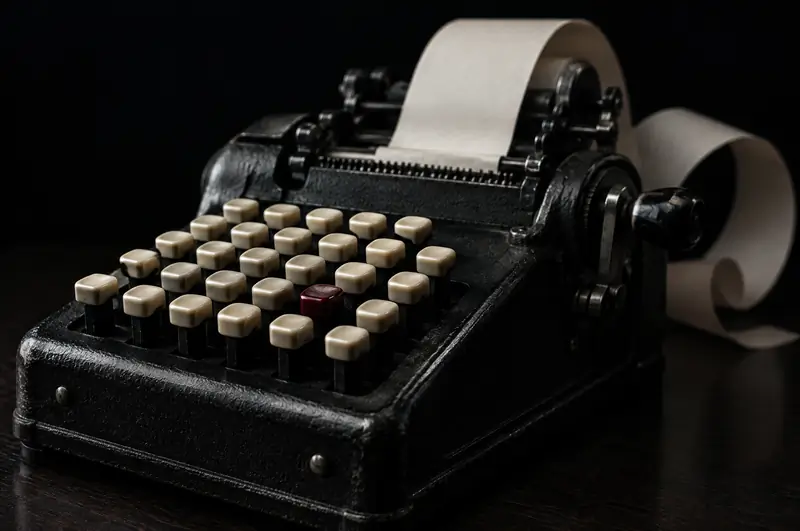
Old black adding machine with ivory keys and one red key, with the paper tape coming out the top.
Fig. 07The month's math
Your month todaybaseline
$
$
Order bumppoint 2
$
%
Upsellpoint 3
$
%
Downsellpoint 4
$
%
Recurring revenuepoint 5
$
%
Sleeping listpoint 7
%
$
Simulation resultper month
  • Today, main offer only$0
  • Plus the order bump$0
  • Plus the upsell$0
  • Plus the downsell$0
  • Plus recurring revenue, first month$0
  • Monthly total, with the fixes+$0 over today$0

Value per buyer on day 1

$0 → $0

Compare with your ad cost per sale.

Recurring revenue built up

$0 per month

After 6 months.

Past buyer reactivation · one campaign

$0

One offer to people who already bought, with ad cost close to zero.

Over 12 months, from the fixes alone

$0

Order bump, upsell, downsell and accumulated recurring revenue. Not counting past buyers.

A simulation built on the numbers you entered. It's not a promise of results. Take rates change with the market, the offer and the timing. Measure yours before deciding.

08 · Next step

Apply for Express Consulting

Narrow concrete staircase rising toward a rectangle of light, with a dark red handrail.
Fig. 08The next step

If the checklist showed you where your funnel loses money and you want a plan built on your numbers, this is the next step.

  1. Briefing before the session.You send me your challenges and your funnel numbers.
  2. 90-minute session.I present a plan built specifically for your business.
  3. We review it together.We go through the plan point by point and decide what comes first.
  4. 30 days of follow-up.After the session, I stay with you on WhatsApp.

It's not a course. It's not a group class. It's your funnel, with your numbers.

Who runs it

Leandro Mendonça

Funnel and sales operations strategist · Mendonça & Co.

I don't teach tools. I build the sales system together with the business owner, on top of their numbers.

In Brazil: on one project, $6.5 million in residential lot sales with a direct team of three. On another, recurring revenue went from $12k to $32k a month in nine months.

Answer and send

2 minutes

When you send it, your answers are saved on my end and a chat opens on my business WhatsApp with them already organized. The conversation continues there. Fields marked * are required.

Write your name.

Enter your WhatsApp number with the country code, for example: +1 305 555 0123.

Just your handle, for example: yourbusiness.

Write your company or brand name.

Tell me in a few words what you sell and to whom.

Do you already sell online?Over the internet: Instagram, DMs, a sales page or an online store.

Pick one of the options.

Average monthly revenue

Pick a revenue range.

Where your sales come from todayCheck all that apply.

Check at least one source.

Tell me the biggest bottleneck today.

Haven't done it yet? Take the checklist. Takes 5 minutes.

Are you willing to invest in a 90-minute consulting session, with 30 days of follow-up, to fix this?

Pick one of the options.

Your answers stay with me and are used only so I can talk to you about your application. They aren't shared with anyone.